
AI-Powered Simulation Modeling: The Revolutionary Transformation Reshaping Engineering in 2025

The simulation tools industry is experiencing its most significant transformation in decades, driven by
the widespread integration of artificial intelligence (AI) and machine learning (ML) technologies. What
was once considered a futuristic concept has rapidly evolved into a practical reality that is fundament‐
ally reshaping how engineers, researchers, and organizations approach complex problem-solving
across industries.
The Dawn of Intelligent Simulation
The convergence of AI with traditional simulation methodologies represents more than just an incre‐
mental improvement—it’s a paradigm shift that is democratizing access to sophisticated modeling
capabilities while dramatically accelerating innovation cycles. Leading simulation software providers,
including COMSOL, Ansys, Siemens, and AnyLogic, are pioneering this transformation by embedding AI
directly into their platforms, creating what industry experts are calling “hybrid intelligence” systems.
This integration is addressing one of the most persistent challenges in engineering simulation: the computational bottleneck that has traditionally limited the scope and speed of design optimization. By leveraging AI-powered surrogate models and machine learning algorithms, engineers can now obtain results in seconds that previously required hours or days of computation.
Surrogate Models: The Game-Changing Technology
At the heart of this revolution are surrogate models—also known as reduced order models (ROMs)— which represent one of the most significant breakthroughs in simulation technology. These AI-driven approximations can compress complex, computationally expensive simulations into lightweight models that deliver near-identical accuracy at a fraction of the computational cost.
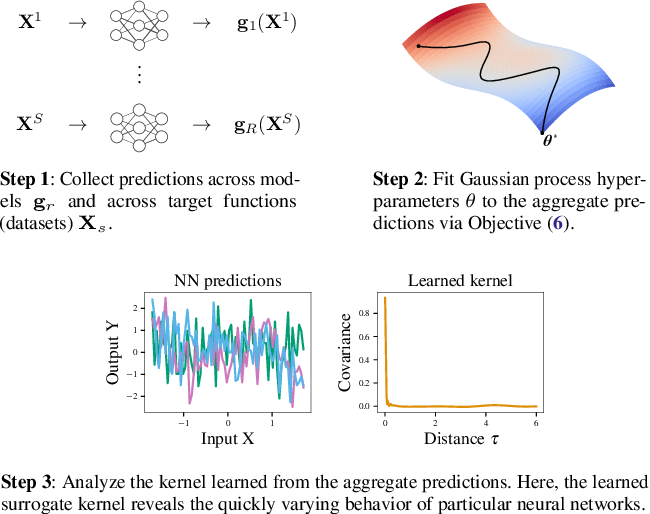
The impact is transformative: what once required supercomputer-level resources can now be executed on standard hardware, enabling real-time decision-making in production environments. Deep neural networks are proving particularly effective in this domain, with accuracy levels that can be arbitrarily close to full finite element models, limited primarily by the time invested in training them.
Companies like COMSOL are leading this charge with their deep-neural-network-based surrogate models, while NVIDIA’s PhysicsNeMo platform is providing state-of-the-art physics-ML capabilities that combine physics with deep learning training data to build high-fidelity, parameterized surrogate models with near-real-time latency.
Conversational AI Meets Simulation
Perhaps the most visible manifestation of this AI integration is the emergence of conversational interfaces in simulation software. COMSOL’s integration with ChatGPT exemplifies this trend, allowing engineers to generate complex Java code for modeling operations using natural language prompts.
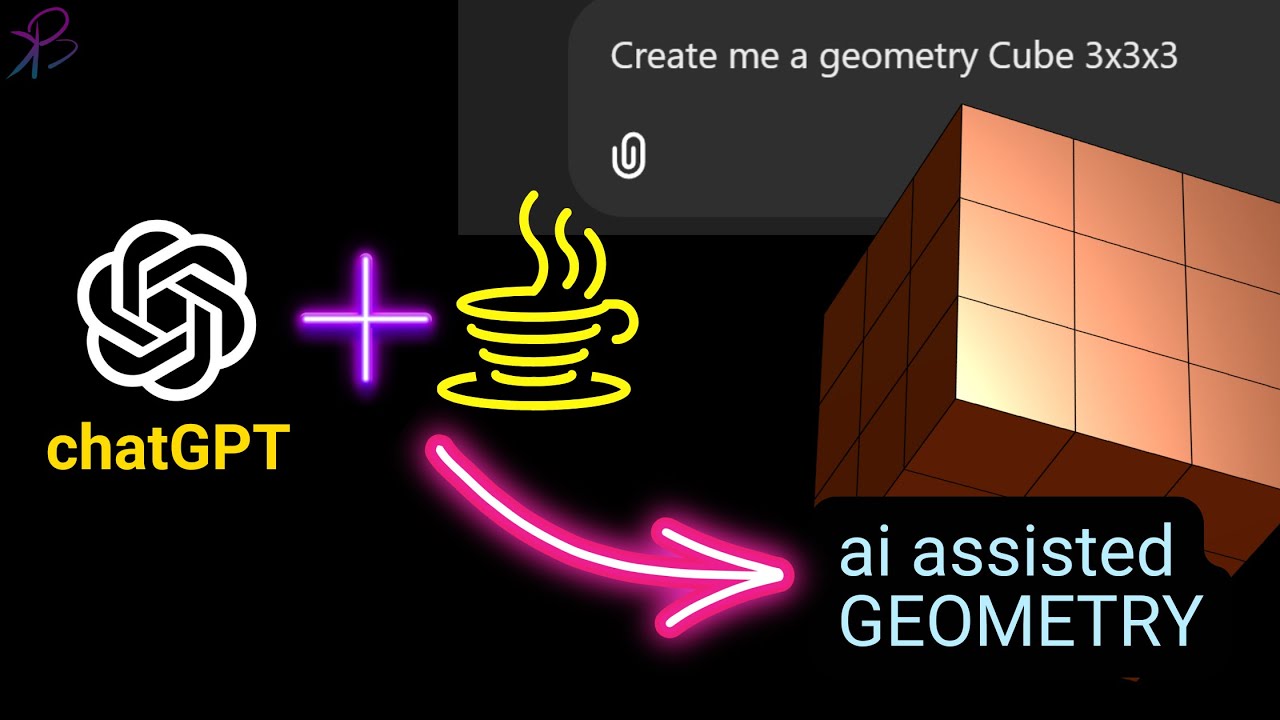
This development is particularly significant because it addresses the accessibility barrier that has traditionally limited simulation to specialists. Engineers can now describe their modeling requirements in plain English and receive executable code that automates geometry creation, physics setup, meshing, and results visualization. While current implementations have limitations—such as spatial perception challenges—the technology is rapidly evolving and promises to make sophisticated simulation accessible to a much broader audience.
Digital Twins Powered by Real-Time Intelligence
The integration of AI with simulation is also revolutionizing digital twin technology, creating what Ansys calls “AI-powered digital twins” through their TwinAI platform. These systems combine the precision of physics-based models with actionable insights derived from real-world operational data, enabling predictive maintenance, real-time optimization, and adaptive system control.

The emergence of Message Queuing Telemetry Transport (MQTT) as a standard protocol for real-time data streaming between simulation models and IoT devices is enabling digital twins to sync with real-world assets, ensuring accurate, real-time representation. This capability is transforming industries from manufacturing to energy, where companies like Tata Steel Nederland are using AI-powered digital twins to optimize energy consumption and achieve decarbonization goals.
Industry Applications and Market Impact
The practical applications of AI-powered simulation are already demonstrating significant value across multiple sectors:
Manufacturing and Automotive: Companies are using AI-enhanced simulations for virtual commissioning, production optimization, and autonomous vehicle testing. The ability to simulate billions of driving scenarios virtually is proving faster, safer, and more cost-effective than physical testing.
Healthcare and Pharmaceuticals: AI-powered computational platforms are accelerating drug discovery by combining molecular simulation with machine learning to identify and optimize drug candidates through data-driven modeling and virtual screening.
Aerospace and Energy: Real-time AI analysis of aircraft and wind turbine data is enabling timely interventions and risk mitigation, while optimizing performance under various operational conditions.
The Technology Behind the Transformation
The technical foundation of this revolution rests on several key innovations:
Reinforcement Learning Integration: Platforms like AnyLogic now support RL integration through Python and Java APIs, enabling agents to explore strategies within simulated environments and learn optimal policies for real-world deployment.
Multimethod Modeling: The combination of different simulation methodologies (system dynamics, discrete-event, agent-based modeling) is overcoming individual limitations and providing more comprehensive representations of complex systems.
Cloud-Based Deployment: The shift to cloud platforms is eliminating hardware constraints and enabling global collaboration, with solutions like Siemens’ Simcenter X offering pay-as-you-go access to sophisticated simulation tools.
Market Growth and Future Outlook
The market response to these innovations has been overwhelmingly positive. The global simulation software market is projected to reach USD 27.19 billion in 2025, growing from USD 23.89 billion in 2024, with a robust CAGR of 13.82% expected through 2034. The healthcare segment is leading this growth with an anticipated CAGR of 18.2%, driven by the adoption of AI-enhanced simulation for
medical training and drug development.
Investment in the simulation industry has been substantial, with over 15,800 funding rounds recorded in the past year, benefiting more than 5,540 companies with an average investment of USD 14 million
per round. This financial backing is accelerating the development and deployment of AI-powered simulation technologies.
Challenges and Considerations
Despite the tremendous potential, the integration of AI with simulation presents several challenges that the industry is actively addressing:
Data Quality and Trust: AI models require high-quality, diverse datasets for accuracy. Companies are implementing rigorous validation protocols and physics-based safeguards to ensure reliable outcomes.
Interpretability and Bias: The “black box” nature of some AI algorithms raises concerns about interpretability. Hybrid models that combine AI with physics-based simulations are emerging as a solution, providing both computational efficiency and physical understanding.
Security and Privacy: The integration of AI systems introduces potential security risks, particularly when dealing with sensitive industrial data. Organizations are implementing robust data encryption, access controls, and anonymization techniques.
The Road Ahead
Looking beyond 2025, experts predict that AI-powered simulation will continue to proliferate into consumer applications. The ability to obtain immediate answers from complex models will enable everyday scenarios like predicting paint durability on houses, optimizing Wi-Fi router placement, or forecasting produce freshness—applications that were previously too computationally intensive for consumer use.
The simulation tools industry stands at an inflection point where AI is not just enhancing existing capabilities but fundamentally redefining what’s possible. As these technologies mature and become more accessible, they promise to democratize sophisticated modeling capabilities, accelerate innovation cycles, and enable solutions to previously intractable problems.
For organizations across industries, the message is clear: AI-powered simulation is not a distant future technology but a present reality that is already delivering tangible value. Those who embrace this transformation early will gain significant competitive advantages in design optimization, operational efficiency, and innovation capability.
The convergence of AI and simulation represents one of the most significant technological advances in engineering and scientific computing, promising to unlock new levels of insight, efficiency, and innovation across virtually every industry. As we move through 2025 and beyond, this technology will undoubtedly continue to reshape how we understand, predict, and optimize the complex systems that define our modern world.