

Arena Simulation: Transforming Manufacturing and Supply Chain Operations

Arena stands out for its unique blend of ease-of-use and quantitative power, making it accessible even to those without a strong programming background. Its visual, pictorial modeling approach, characterized by a drag-and-drop interface, allows users to represent complex operations using intuitive graphics and pre-defined building blocks.
Core Features and Capabilities
Intuitive Modeling Environment
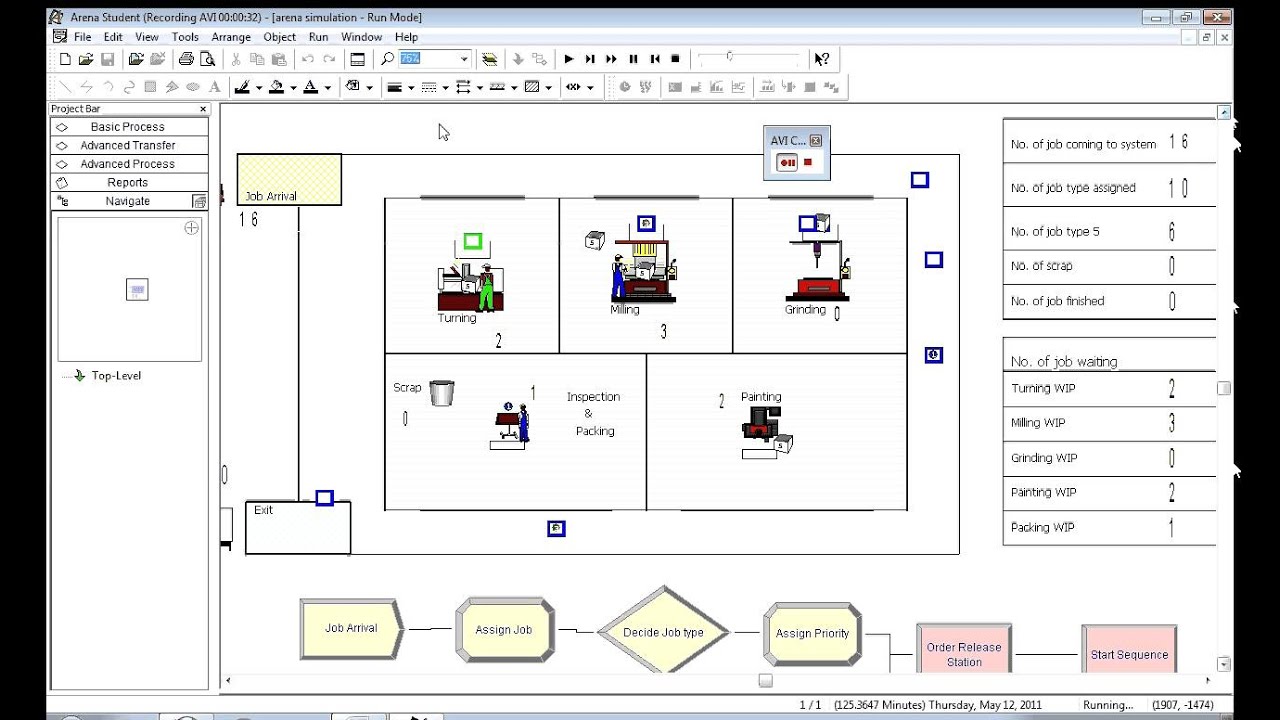
Flowchart Modeling Methodology: Arena employs an easy and intuitive flowchart modeling methodology, allowing users to build models by placing modules (representing different processes or logic) and connecting them with lines to define the flow of entities. This approach eliminates the need for customized code or programming for basic models.
Drag-and-Drop Interface: The software features a user-friendly drag-and-drop interface, making it straightforward to build simulations and visualize results.

Predefined Building Blocks: Arena offers an extensive library of predefined building blocks, simplifying the construction of complex process flows.
Key Model Components
Process Panels: These represent workstations or operations within a system, defining the process flow, resource allocation, and the logic behind the system's behavior.
Entities: Entities are the objects or items that move through the manufacturing system, such as physical products, orders, or other elements of interest. Users can create custom attributes for these entities to tailor the simulation.
Resources: Resources refer to the people, machines, or equipment required for operations. They can be assigned to process panels to simulate their availability and utilization, including dynamic resource allocation and shift scheduling.
Queues: Queues represent waiting areas where entities accumulate before moving to the next operation, helping to simulate work-in-progress buildup and analyze the effect of different queue configurations.
Variables: Variables are used to store and manipulate data within the simulation model, enabling users to define rules, decision-making logic, and performance measures.
Advanced Analysis and Reporting
Dynamic Dashboards: Built-in dynamic dashboards provide the necessary model analysis for optimization, allowing users to build customized displays of model information to better understand process dynamics.
Custom Reporting: Arena supports custom reporting on performance metrics, offering meaningful dashboards to present results.
OptQuest Optimization: The software incorporates OptQuest optimization, utilizing well-known heuristics to find optimal solutions.
Key Performance Metrics: Users can understand system performance based on key metrics such as costs, throughput, cycle times, equipment utilization, and resource availability.
Applications in Manufacturing
Arena Simulation Software is widely applied in the manufacturing industry to address various challenges and optimize operations.
Manufacturing Optimization
Process Flow Analysis: Arena enables modeling and analysis of process flow, packaging systems, job routing, inventory control, warehousing, distribution, and staffing requirements.
Bottleneck Identification: It helps identify bottlenecks and assess equipment utilization within manufacturing operations.
Throughput Enhancement: By simulating the impact of variability in manufacturing times, product changeover, and maintenance downtimes, Arena helps determine the achievable range of production throughput.
Capacity Planning: The software aids in determining the ideal capacity of raw material and finished goods, storage areas, tanks, conveyors, and other equipment sizing decisions.
Production Planning and Scheduling
Arena allows manufacturers to optimize production planning and scheduling by simulating different scenarios. This helps in identifying bottlenecks, balancing workloads, and determining optimal inventory levels. By adjusting parameters such as machine capacity, order arrival rates, or resource allocation policies, manufacturers can improve production efficiency and minimize lead times.
Lean Manufacturing and Process Improvement
Arena can model and analyze lean manufacturing principles, such as Just-in-Time (JIT) and Kanban systems. It helps identify waste, optimize material flow, and streamline processes. By experimenting with different layouts, batch sizes, and inventory levels, manufacturers can identify the most efficient configurations and eliminate non-value-added activities.
Assembly Line Simulation
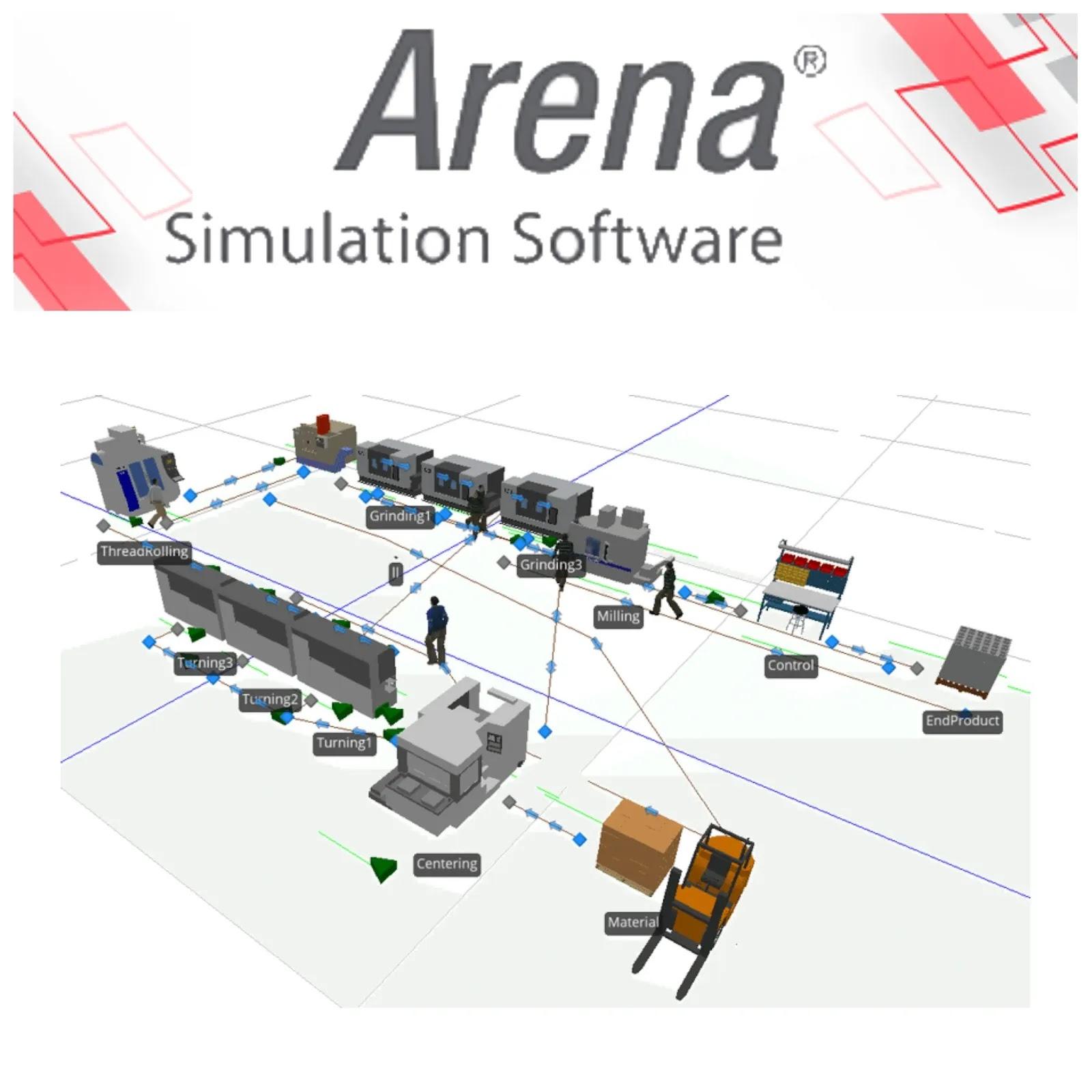
Arena provides a computer-based model of production lines to validate, test, and improve performance. It helps obtain reliable data on how variables like machine reliability, machine adjustment (speed, quality impact), line balancing, and operator investments affect overall efficiency, downtime, and product quality.
Supply Chain Management
Arena enables manufacturers to create virtual supply chain models and test different strategies to optimize inventory levels and manage demand fluctuations. By analyzing the impact of lead times, transportation costs, order quantities, and demand variability, manufacturers can make data-driven decisions to improve supply chain performance and reduce costs.
Best Practices for Mastering Arena
Methodical Model Building
Start Simple: Always begin with core processes and gradually add complexity. This approach aids in troubleshooting and understanding the model's behavior.
Clear Problem Definition: The key to any successful simulation project is a clear statement of the problem to be addressed and what success looks like, including defining tasks, goals, and specifying input/output variables.
Regular Verification and Validation
Logic Verification: Consistently verify that the logic of your model is correct.
Data Validation: Validate the model against real-world data to ensure accuracy and ensure it reflects the actual system.
Effective Debugging Techniques
Utilize Arena's debugging tools, such as the "Step Through" function, which helps identify issues in the model's flow.
Leveraging Advanced Features
Resource Scheduling and Optimization: Use Arena's capabilities for dynamic resource allocation, including shift changes and break schedules, to ensure optimal resource utilization.
Custom Attributes and Variables: Tailor simulations by creating custom attributes for entities and global variables that affect the entire model.
Data Integration: Learn to import data from external sources like Excel or databases for more accurate and dynamic simulations.
Experimentation and Scenario Analysis
"What-if" Scenarios: Actively run "what-if" scenarios to evaluate proposed process changes, test system limits, and identify optimal configurations.
Scenario Analysis: Run multiple scenarios with variations in input parameters to evaluate their impact on the model's output, providing data-driven insights into potential outcomes.
Integration and Collaboration
Arena seamlessly connects with other AspenTech products and third-party applications, enabling thorough process analysis and optimization. This integration facilitates efficient data transfer between multiple tools, significantly improving the overall engineering workflow. It also smoothly connects with detailed engineering processes, supporting the Front-End Engineering Design (FEED) execution phase.
Industry Impact and Applications
Arena is utilized across diverse industries beyond manufacturing, including:
- Healthcare: Optimizing patient flow and resource allocation
- Service Industries: Improving customer service processes
- Logistics: Enhancing distribution and warehousing operations
- Government: Analyzing public service delivery systems
Conclusion
Arena Simulation Software represents a cornerstone technology for modern manufacturing and supply chain optimization. Its combination of user-friendly interface, powerful analytical capabilities, and comprehensive modeling features makes it an indispensable tool for organizations seeking to improve operational efficiency, reduce costs, and enhance decision-making processes.
By adhering to best practices in model development, verification, and validation, users can effectively leverage Arena to explore complex scenarios, optimize processes, and drive continuous improvement initiatives. As manufacturing becomes increasingly complex and competitive, Arena's ability to provide data-driven insights and predictive analytics positions it as a critical enabler of operational excellence.